
Room Objects in Dissolution of My Self
Every hotspot is a memory. After you spend it, the prop leaves the apartment’s usable world.
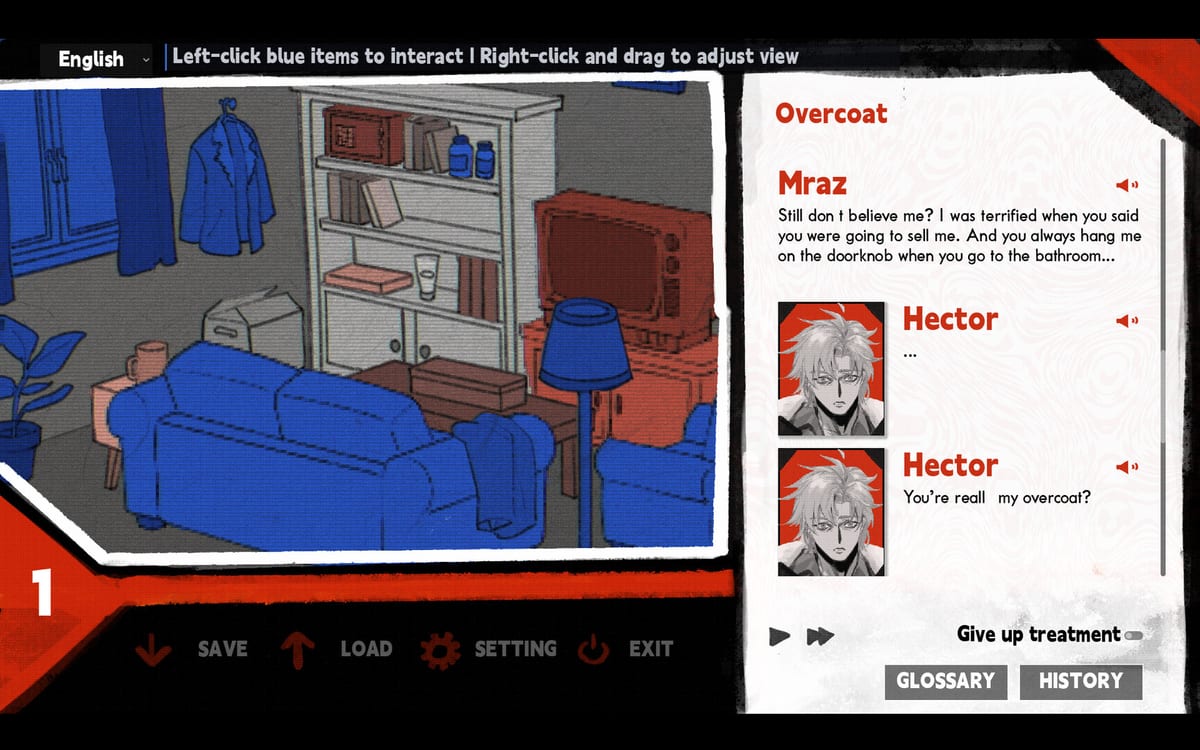
Dissolution of My Self does not give you a dungeon map. It gives you a rented room packed with evidence. Official descriptions name windows, a television, dining chairs, and medicine bottles as examples. itch.io copy adds furniture and everyday objects. Players have also written about a passport that demands a long press and scroll. This page is the inventory of those hotspots: what they represent, how the blur rule works, and how to track them without turning the game into a spreadsheet.
Pair this list with the walkthrough and the memory order planner. Controls for stubborn gestures live on how to play.
The blur rule
When you successfully trigger a memory, Hector does not file it. He discards it. The associated object slowly blurs and loses function. Store copy is explicit: triggered objects peel away as he gives up his past and his self. Demo notes go further and mention room text changing for each layer, so the apartment’s remaining language updates as props leave.
Practical consequences:
- A silent hotspot is often a spent memory, not a bug.
- You cannot hoard interactions for a bonus dungeon.
- Click order is a reading order. It is not a crafting recipe.
- If you need a second presentation, start a new file rather than expecting the same chair to talk twice.
Window
The window is the cheapest metaphor in the room and the most important. Hector is confined by disability, status, and a language barrier. Outside is a daily life he cannot join. Clicking the window is how the game shows exile without a world map. If you click it first, you will probably hear the trapped-prince version of Hector before you hear the tyrant-nephew version. If you click it late, the view may land after other memories have already soured his voice. That difference is why endings talks about presentation instead of branching plots.
Television
The television plays programs he cannot understand. It is noise from a country that is not his. Treat it as a language-barrier object, not as a channel you are meant to “solve.” When it blurs, you are not losing a fun side activity. You are watching one more prosthetic for boredom leave the apartment.
Dining chairs and table
Shared furniture is where the relationship becomes impossible to classify. Matvey is uncle, aide-de-camp, caretaker, wife, mother, and subject, depending on which wound Hector is picking. Chairs are not loot. They are seating for a power structure that already collapsed at the national level and is now collapsing at the kitchen level. If a chair interaction includes a mini-gesture, slow down; Next Fest feedback led to extra hints for those scenes.
Medicine bottles
Medicine is the only object class that the achievement list treats like a fork. “Take pills on time” and “Give up treatment” are both listed. The Before You Buy FAQ says the pill choice affects order, pacing, and presentation, not the ending. Read pills and choices before you empty the bottle on a file you care about. You can finish the game either way. You cannot make Hector healthy either way.
Passport and papers
Documents are where input complaints cluster. One demo player could not long-press and scroll a passport with a trackpad. The developer said the demo required a mouse. If you are stuck on paper, that is an interface problem until the object has actually blurred. After it blurs, it is a spent identity prop—exactly the kind of thing a fallen prince should not be able to keep using forever.
Papers also pull toward backstory: aliases, flight from a fallen kingdom, Matvey working as an unlicensed electrician. Those facts are on the Steam page and in Matvey’s character notes. You do not need a datamined item ID to understand why a passport is in a cramped foreign rental.
Other everyday objects
Anything that looks lived-in can be a hotspot: more furniture, small personal items, things that would be boring in a tourist screenshot and vicious in a memory. The wiki will not invent a complete item ID list the developers have not published. If you find a clickable prop that is not named here, add it to your memory order list and assume the same blur rule applies.
Character portraits and profile screens exist as UI, not as room props. A demo bug broke line breaks on profiles; that was patched. If a biography looks cut off, update the build via demo changelog rather than assuming the object is hiding a fourth page.
Tracking without spoiling
A useful personal list has four columns: object name, clicked?, blurred?, notes on Hector’s mood. Mood notes matter because official copy says not to take his words at face value. The same window can “mean” different things depending on whether you already spent the medicine or the television.
Do not wait for a journal to do this work. The design wants the room itself to become the journal by subtraction. When the apartment looks emptier, you are winning the only campaign the game has.
Related pages
- Walkthrough for phase-by-phase investigation.
- Pills and choices for the bottle fork.
- Achievements if you are hunting “forgotten” badges that sound like object layers.
- Getting started if a hotspot will not complete.
The rented room is small. The object list feels long only because each click deletes a tool Hector used to stay a person. That is the whole game, restated as furniture.
Frequently Asked Questions
Quick answers to the most common questions.
Why did an object stop working?
After its memory plays, it blurs and loses function. That is intended. Track leftovers with the memory order planner.
Which objects are confirmed in official copy?
Windows, television, dining chairs, medicine bottles, furniture, and everyday items. Players also report a passport with a long-press gesture. See how to play for controls.
Is there a hidden item that unlocks another ending?
No. The studio says options change how you read the text, not a second storyline. Endings covers that claim.