
Dissolution of My Self Guides
How to click the room, when to take pills, and what actually changes.
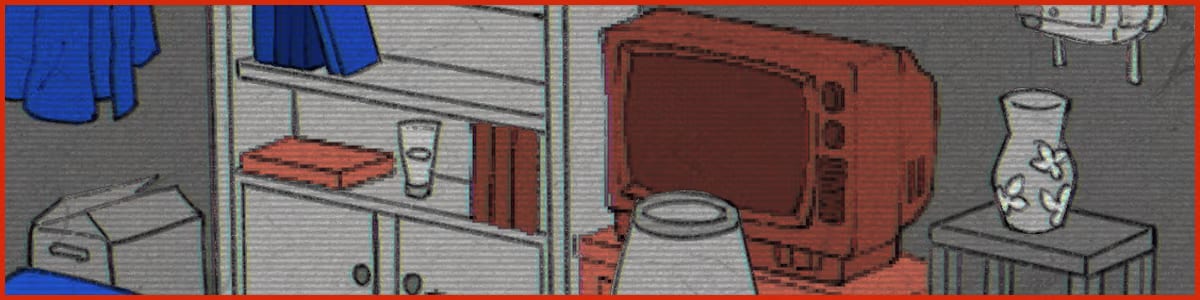
This hub is the map for every Dissolution of My Self tutorial on the wiki. The game is a Windows point-and-click psychological horror released on Steam on September 3, 2026 by Pop Elephant Studio. You do not fight, sneak, or outrun a monster. You sit in a rented room with an exiled prince and decide which everyday object he is willing to remember—and then forget.
If you are about to launch for the first time, start with how to play. That page covers mouse gestures, language settings, text speed, voice replay, and why a trackpad can stall on items such as the passport. If you already finished the demo and want a full-game route, jump to the walkthrough. Keep room objects open in another tab so you can tick windows, the television, chairs, bottles, and papers as they blur.
What these guides assume
Official store copy, the Before You Buy FAQ, itch.io notes, and press coverage agree on a short list of facts this hub will not contradict:
- Single-player only, Windows via Steam, with a free demo on Steam and itch.io.
- Text in English, Japanese, and Simplified Chinese; full Japanese voice acting.
- About 3–4 hours for the full story; demo length is about 30–50 minutes depending on reading speed.
- One ending. Exploration order and the pill choice change pacing and presentation, not a second plot.
- No combat, no jumpscares, no monster encounters. Horror is social, spatial, and linguistic.
Those facts matter because a lot of player questions are really “did I miss a route?” The honest answer is usually no. You missed a reading of the same collapse. Pills and choices and endings explained exist so you can chase presentation without hunting a fake true ending.
How to use this hub without spoiling yourself
The developers asked players to mark story talk and to hold full playthrough uploads until about September 17, 2026. This wiki follows that spirit. Mechanic pages stay specific. Story pages stay cautious. If a paragraph would name a late memory, it will warn you first.
A practical reading order:
- Before You Buy — official FAQ, price, length, one ending.
- Content warnings — descriptors, screen shake, who should skip.
- Getting started — controls, settings, mouse.
- Demo guide — what the free build actually contains.
- Room objects — what you can click and what “blur” means.
- Walkthrough — a spoiler-aware investigation loop.
- Pills and choices — medicine versus giving up treatment.
- Endings, achievements, review.
Character context lives under Characters, especially Hector and Matvey. Patch history sits in Updates. If you want a scratchpad for click order, use the memory order planner. Official store, social, and support URLs are collected on Links.
Player pain points these pages try to solve
People bounce off Dissolution of My Self for three boring reasons and one serious one.
The boring reasons: they try to play with a trackpad; they assume a horror tag means combat; they hunt multiple endings until the FAQ feels like a joke. The serious reason: they did not read the content descriptors. This work includes self-harm, psychological manipulation, transgressive intimacy between relatives, regression, violence, substance misuse, and trauma. Later sequences shake the screen hard enough that photosensitive players should pause. It is not an eroge, but it is also not a commute game.
The review is blunt about audience. The getting started page is blunt about input. The walkthrough is blunt about the fact that you cannot “lose” the story by clicking the television before the window.
What “dissolution” means in play
When you trigger a memory, Hector does not add it to a journal you can browse forever. He spends it. The associated object loses function and visually peels away. Demo patch notes even mention room text changing per layer, which is the game telling you the apartment is not a static diorama. You are dismantling a person’s usable world. That is why the objects list is not a loot table. It is a funeral inventory.
Voice acting is Japanese even if you read English text. Hector is voiced by Netoru Irakusa; Matvey by Tetsuto Furukawa. Settings added during the demo period include voice replay, separate character voice volume, and text speed. If a line feels like a joke from hell—and the developers use that phrase on purpose—replay it before you decide Hector is being literal. Store copy warns you not to take everything he says at face value. His recounting depends on his state of mind, which the pill choice and click order both nudge.
After you finish
A first run should be for atmosphere. A second run is for achievements such as taking pills on time versus giving up treatment, plus hidden badges whose names you can read on the achievements page without needing a spoiler-heavy unlock guide. If you only have time for one extra tool, keep the memory order planner. It will not invent a secret ending. It will keep you from forgetting which chair already went silent.
When a Steam news post contradicts a wiki sentence, trust the news post and then tell us. Launch pricing was $5.99 with a two-week 10% discount. System requirements are light: Windows 10 and about 600 MB of RAM. That does not mean the subject matter is light. Read the warnings, pick a mouse, and then open the room.
Frequently Asked Questions
Quick answers to the most common questions.
Which Dissolution of My Self guide should I open first?
Buyers should open Before You Buy and content warnings. Then how to play or the demo. Returning players can go to the walkthrough.
Will these guides spoil the ending?
Mechanic pages describe systems. Endings explains that there is one conclusion without walking through late scenes beat by beat. Story-sensitive paragraphs are labeled.
Is there a codes or tier list page?
No. This is a single-player narrative, not a live-service Roblox title. The useful hubs are guides, characters, updates, and tools.